

Lithuania Emphasizes Shift Away from Single-Use Plastics at UN Conference
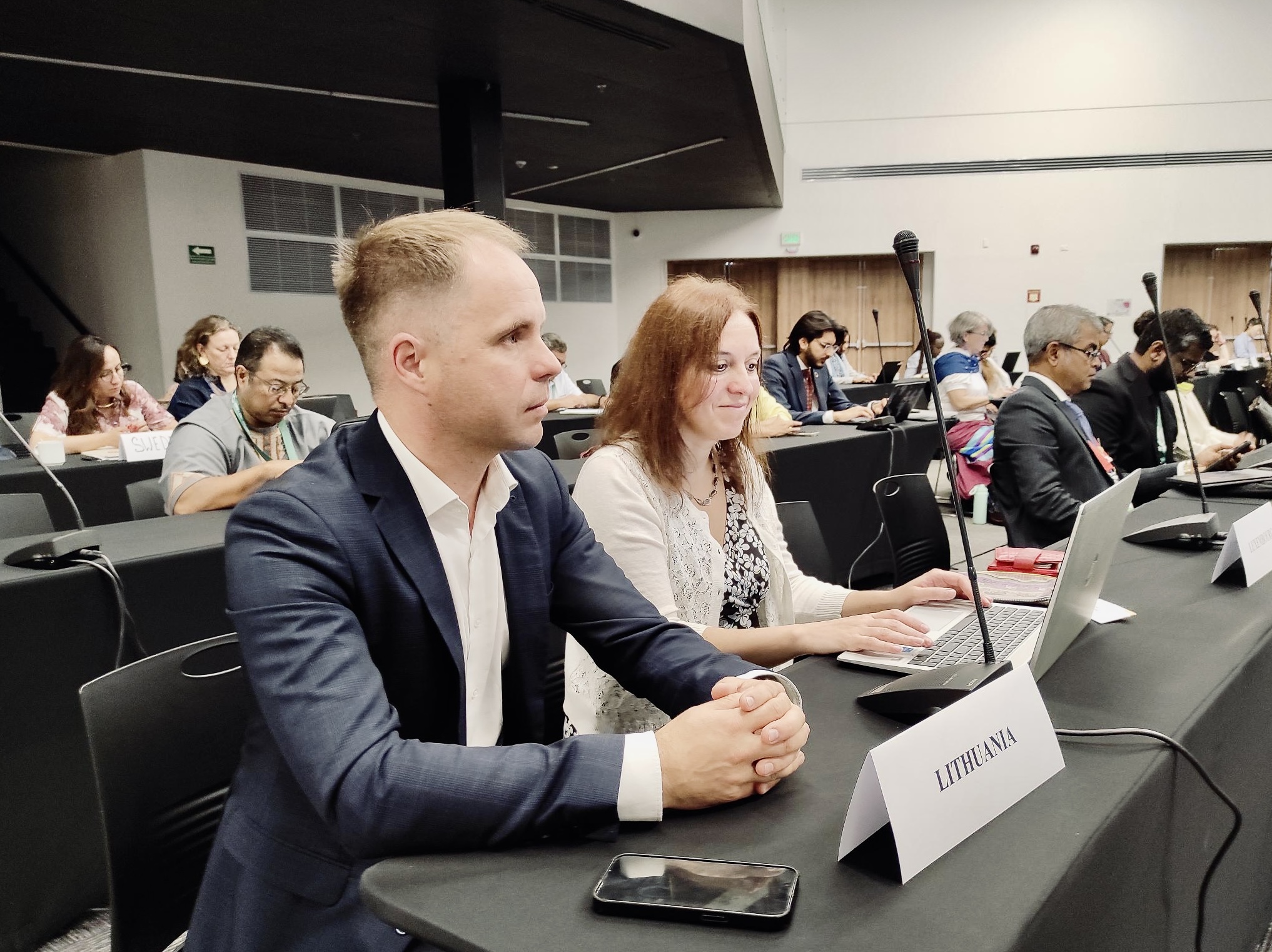
At COP 16 of the UN Convention on Biological Diversity in Colombia, global environment ministers discussed developing an international legally binding agreement to combat plastic pollution.
Following the 2022 decision by the UN Environment Assembly to create such an instrument by 2024, a meeting in South Korea later this year will aim to finalize the agreement’s text. This initiative responds to the limitations of isolated national and regional actions in addressing plastic pollution.
“Plastic pollution isn’t caused by plastic alone but by improper manufacturing, usage, and disposal of certain plastic products. We can address this issue by phasing out single-use plastics, which already have sustainable alternatives, and by implementing production limits on other plastics,” said Lithuania’s Deputy Minister of the Environment, Kęstutis Šetkus.
Šetkus emphasized the importance of creating non-toxic plastic products, especially for items used in food packaging and children’s products, with worldwide application beyond just the EU.
Lithuania shared its experience in waste management, emphasizing extended producer responsibility (EPR) as the most effective approach. Šetkus noted that this principle should be mandatory, citing Lithuania’s deposit system for PET beverage bottles. “In many European countries using this system, around 86% of bottles are collected. In Lithuania, our collection rate is even higher, at 92%,” he said.
The draft agreement under negotiation at COP 16 seeks to prevent plastic pollution in all environments, including water ecosystems, protect human and animal health, and support biodiversity. It promotes sustainability, the circular economy, shared responsibility, and funding mechanisms to support national-level implementation aligned with each country’s priorities.
Plastic production and waste have doubled in less than two decades, with much of it still ending up in unregulated landfills, burned openly, or released into the environment. According to UNEP and the OECD, without policy interventions, plastic use is expected to rise by another 70% by 2040 compared to 2020, posing significant risks to both the environment and human health.