

€884 million to lower heating bills and improve transport in Lithuania’s regions
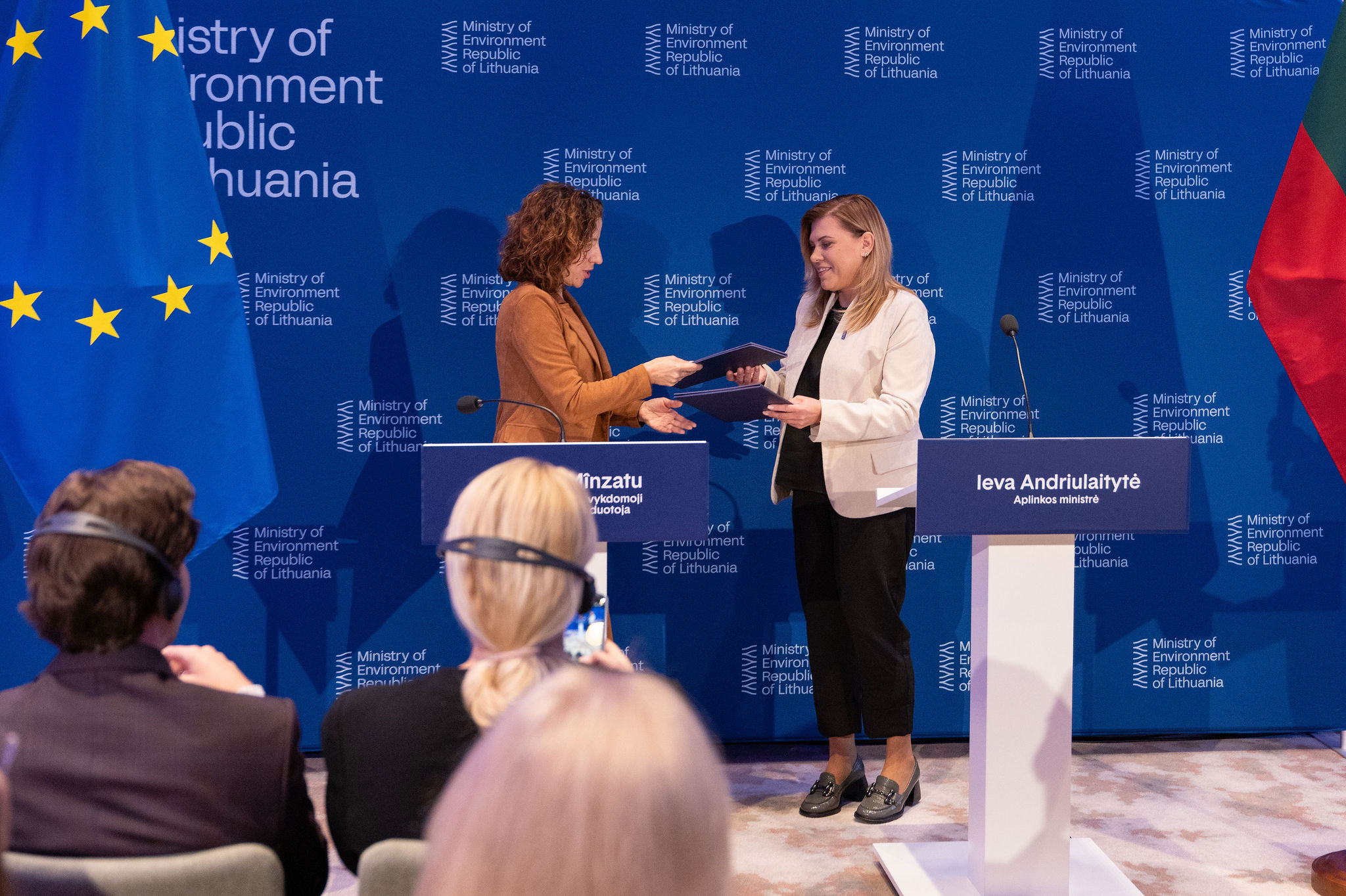
On 30 September in Vilnius, European Commission Executive Vice-President Roxana Mînzatu and Lithuania’s Minister of Environment Ieva Andriulaitytė signed a financing agreement under the Social Climate Fund. Lithuania’s Social Climate Plan provides for around €884 million in investment by the end of 2032 to renovate homes, support cleaner transport, improve energy efficiency and reduce heating bills.
“With €663 million in EU support, Lithuania’s Social Climate Plan will help vulnerable households pay less to heat their homes and reach work, schools and healthcare more easily. This is what the Social Climate Fund is for: making sure people with the fewest resources benefit from the transition, wherever they live,” said Roxana Mînzatu, European Commission Executive Vice-President for Social Rights and Skills, Quality Jobs and Preparedness.
Around €663 million of the planned investment will come from the EU’s Social Climate Fund, with Lithuania contributing a further €221 million. The fund is designed to support vulnerable households and micro-enterprises.
“Our priority is to ensure that this €884 million investment improves people’s everyday lives. We want the support to reach Lithuania’s regions as quickly as possible, delivering warmer, more energy-efficient homes, lower bills and easier access to work, schools and healthcare. These are the results we aim to achieve through the Social Climate Plan,” said Minister of Environment Ieva Andriulaitytė.
Support for home renovation will be available across Lithuania. More than €372 million is earmarked for comprehensive and partial renovations of apartment buildings and single- and two-family homes. For vulnerable households, funding is expected to cover 50–85% of the cost of energy efficiency improvements, depending on the measure and the fuel used for heating.
Eligible work includes building insulation, window replacement, heating system upgrades, and other energy-saving improvements. Insulated buildings retain heat more effectively, reducing the energy needed to maintain a comfortable indoor temperature. The plan also provides for expanding the social housing stock by building or purchasing homes with an A++ energy performance rating.
A further €440 million is planned for vehicles, transport services and infrastructure. Funding will cover the purchase of buses, electric cars and bicycles, as well as the installation of electric vehicle charging points and the construction of cycle paths.
In regions with limited public transport, the plan provides for the development of on-demand transport services tailored to residents’ needs. These services will help vulnerable residents access healthcare, education and other essential services more easily.
Energy advice centres will help residents access funding, offering personalised advice and practical assistance with applications and project implementation.
Many of the plan’s measures are expected to be launched in 2027. The Ministry of Environment, the Ministry of Transport and Communications, the Ministry of Social Security and Labour, and the Environmental Projects Management Agency will be responsible for implementing them.
The European Commission approved Lithuania’s Social Climate Plan on 5 June 2026, making Lithuania the second EU Member State to have its plan approved.
Last updated: 30-09-2026
Related news:
Lithuania aims to reduce barriers to the circular economy during its EU Council Presidency
Lithuania’s Social Climate Plan aims to improve living conditions for vulnerable people
Baltic States and Poland strengthen cooperation on implementing energy and climate plans