

Transboundary Water Management and Climate Change Discussed in Ljubljana
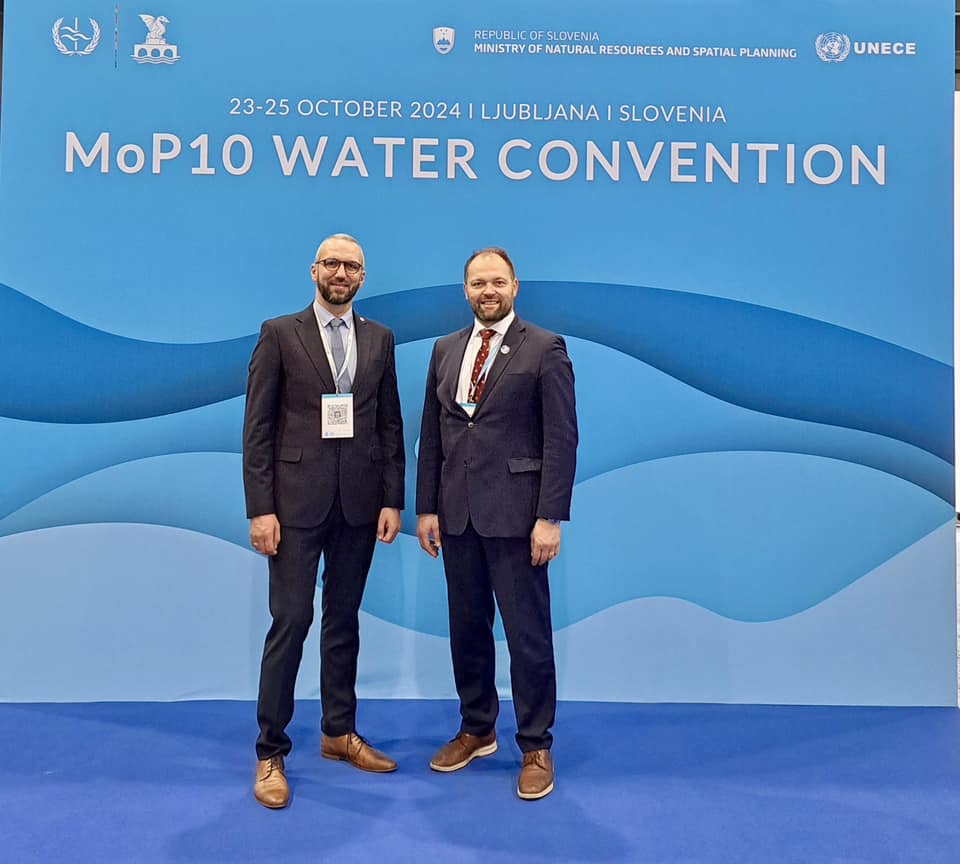
The 10th Meeting of the Parties to the Convention on the Protection and Use of Transboundary Watercourses and International Lakes (MOP10) was held last week in Ljubljana, Slovenia, with over 500 representatives from 80 countries, international organizations, non-governmental organizations, financial institutions, and academia in attendance.
Lithuania was represented by Vitalijus Auglys, Head of the Pollution Prevention Policy Group at the Ministry of the Environment, and Tomas Želvys, Senior Advisor.
A key highlight of the meeting was the adoption of the new Work Programme for 2025-2027 under the Water Framework Directive (WFD). During this session, Parties identified their priorities and set the strategic direction for transboundary water management in the coming years. The session also included the election of new members to the WCD Bureau.
The meeting featured a high-level panel discussion on “Our Waters, Our Future,” which focused on the importance of transboundary cooperation for enhancing climate resilience and promoting sustainable development in shared river basins.
Participants discussed progress made over the past three years, including actions on climate change adaptation, water management approaches, and cooperation within transboundary water agreements.
Lithuanian representatives also held discussions with the Polish delegation, who presented their ongoing project, LIFE PILICA: Implementation of River Basin Management Plans in the Vistula River Basin, which is based on the successful model of the Pilica River Basin. The meeting provided an opportunity to discuss further cooperation between Lithuania and Poland to achieve the good ecological status of transboundary waters.
For more than three decades, the Water Convention has been one of the most important platforms for promoting the sustainable management of transboundary water resources. What began as a regional initiative has now evolved into a global agreement that significantly contributes to world peace, stability, and the achievement of the Sustainable Development Goals (SDGs). The convention plays a crucial role in the sustainable use and protection of water resources while also contributing to climate change mitigation efforts.
Last updated: 19-11-2024
Related news:
Lithuania’s Social Climate Plan aims to improve living conditions for vulnerable people
Baltic States and Poland strengthen cooperation on implementing energy and climate plans
Key provisions of the EU Packaging and Packaging Waste Regulation now apply
Algirdas Pieniuta takes office as Vice-Minister of Environment