

International Conference in Bangkok Adopts Key Decisions on Ozone Layer Protection
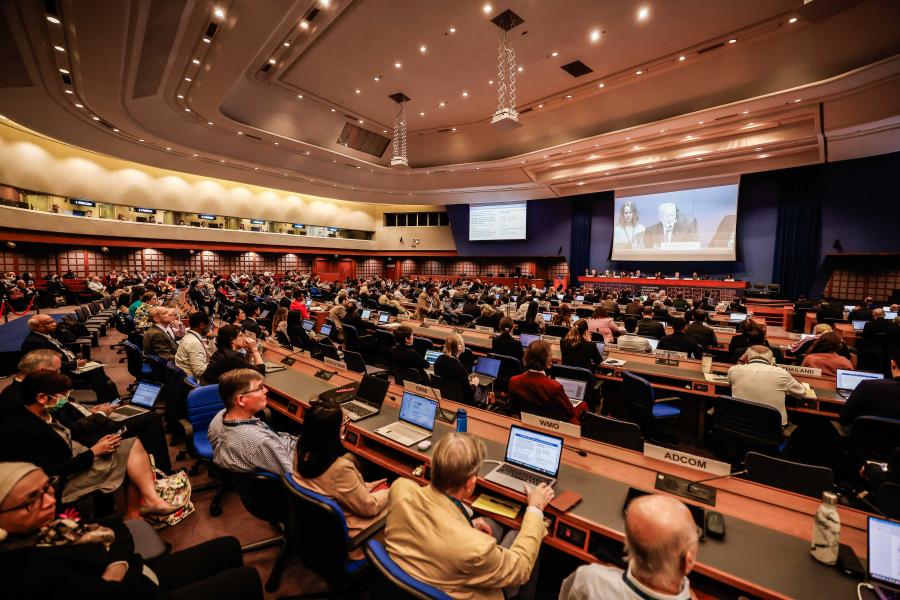
Bangkok, Thailand – October 28 to November 1, 2024 – Nearly 200 countries are meeting in Bangkok for the 13th Meeting of the Parties (COP-13) to the United Nations Vienna Convention for the Protection of the Ozone Layer and the 36th Conference of the Parties (MOP-36) to the Montreal Protocol on Substances that Deplete the Ozone Layer. At this major international event, participants are discussing the protection of the ozone layer, combating climate change, and agreeing on measures to enhance the effectiveness of the Vienna Convention and Montreal Protocol.
Lithuania is represented at the conference by Ingrida Varžgalienė, Adviser to the Pollution Prevention Policy Group at the Ministry of the Environment.
One of the key decisions at the joint COP-13/MOP-36 meeting is focused on tackling the illicit trade in substances controlled by the Montreal Protocol. Discussions will also address the importation of energy-inefficient products and equipment, and the need for additional information on very short-lived substances. Other topics include the use of controlled substances as feedstock, sustainable management measures for collected, recycled, and reclaimed halons, and strengthening global and regional atmospheric monitoring of controlled substances. Additionally, the possibility of deferring commitments related to the transition to climate-safe cooling and refrigeration equipment for certain groups of countries will be considered. Climate-friendly alternatives to metered-dose inhalers will also be explored, alongside other aspects of the Montreal Protocol.
MOP-36 will also address the challenges faced by developing countries in implementing the Kigali Amendment to the Montreal Protocol. These countries must phase out the use of HCFCs, reduce greenhouse gas production and use, and meet other environmental requirements in the coming years.
The Vienna Convention for the Protection of the Ozone Layer was signed by 28 countries in 1985, followed by the Montreal Protocol on Substances that Deplete the Ozone Layer in 1987. As one of the most successful international treaties, nearly 200 countries worldwide have ratified the Protocol and are complying with its obligations.
The Kigali Amendment to the Montreal Protocol, adopted in 2016, aims to protect the global climate by phasing out the production and use of hydrofluorocarbons (HFCs), potent greenhouse gases with high warming potential. While HFCs do not deplete the ozone layer, they are often used as substitutes for ozone-depleting substances.
Lithuania acceded to both the Vienna Convention and the Montreal Protocol in 1994 and has progressively ratified all subsequent amendments to the Protocol.
Global efforts to ban the production and use of ozone-depleting substances have proven effective in protecting the ozone layer. Recent scientific studies show that the ozone layer is recovering, with Antarctica’s ozone expected to return to 1980 levels by around 2066.
Last updated: 19-11-2024
Related news:
Lithuania’s Social Climate Plan aims to improve living conditions for vulnerable people
Baltic States and Poland strengthen cooperation on implementing energy and climate plans
Key provisions of the EU Packaging and Packaging Waste Regulation now apply
Algirdas Pieniuta takes office as Vice-Minister of Environment