

Lithuania emphasises bioeconomy, nature conservation and financing at meeting of EU Directors-General for the Environment
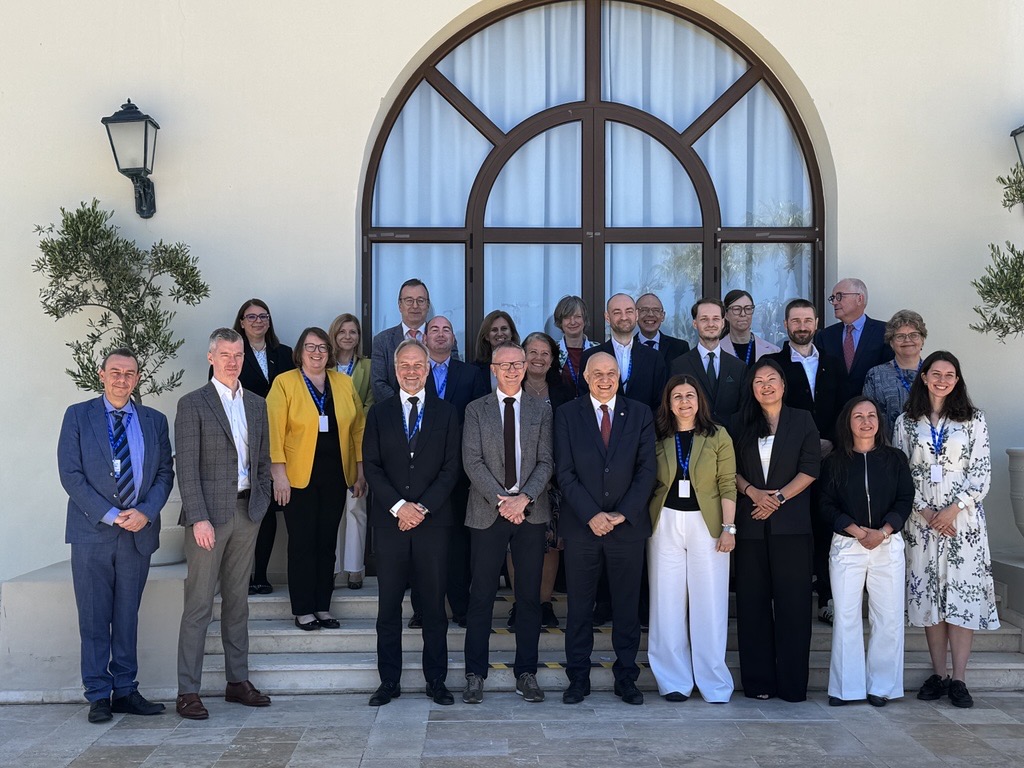
On 7 May, at a meeting of EU Directors-General for the Environment held in Paphos, Cyprus, Vice-Minister of Environment Aira Paliukėnaitė presented Lithuania’s position on the implementation of the EU Bioeconomy Strategy, the evaluation of the Birds and Habitats Directives, international negotiations on a global agreement on plastic pollution and the potential of nature credits.
“It is important for Lithuania that EU environmental policy remains ambitious while also being clear and practical to implement. This requires proportionate requirements, better coordinated procedures, more sustainable financing and clear conditions for public authorities, businesses and society,” said Vice-Minister of Environment Aira Paliukėnaitė.
In November 2025, the European Commission presented a new EU Bioeconomy Strategy. It aims to strengthen the role of biotechnology and bio-based products in the EU economy, accelerate the uptake of innovation, develop markets for bio-based materials and ensure a sustainable supply of biomass.
In response to the updated EU Bioeconomy Strategy, Lithuania is preparing a national bioeconomy action plan assessing both existing measures and possible new initiatives to support the development of the bioeconomy. In the forest sector, particular emphasis is placed on increasing forest cover, strengthening the sustainable supply of biomass and making greater use of the potential of ecosystem services and non-wood forest products.
The meeting also addressed the European Commission’s evaluation of the Birds and Habitats Directives, known as the “stress test”, which forms part of the broader EU agenda to simplify legislation. The evaluation seeks to determine whether the EU’s principal nature conservation legislation remains fit for purpose and whether its implementation can be simplified while maintaining the same environmental objectives.
Lithuania noted that small-scale procedures require substantial administrative resources. For example, assessing forest management plans for thousands of small privately owned forest holdings within the Natura 2000 network is time-consuming and administratively demanding.
“Nature conservation requirements must be applied in a way that makes it clear when an assessment is required and how extensive it should be. More precise assessment thresholds and criteria, together with better coordinated procedures, would provide greater clarity for residents, businesses and public authorities, reduce duplication and enable nationally important projects to be implemented more efficiently,” said A. Paliukėnaitė.
The session on international affairs addressed two processes of particular importance to the EU this year: the EU position in negotiations on a global agreement to reduce plastic pollution and preparations for the seventeenth meeting of the Conference of the Parties to the Convention on Biological Diversity, COP17.
In the negotiations on reducing plastic pollution, Lithuania supports maintaining the previously agreed EU position that the future agreement should cover the entire life cycle of plastics. It should also include clear measures addressing chemicals used in plastics that may pose risks to human health and the environment, as well as clear arrangements for implementing and updating the agreement in the future.
In preparation for COP17, Lithuania stressed the importance of maintaining political attention on the implementation of the Kunming-Montreal Global Biodiversity Framework and on nature restoration. As these objectives require long-term financing, participants also discussed the potential of nature credits to attract additional private funding for biodiversity protection and ecosystem restoration.
“Nature restoration requires long-term and sustainable sources of finance. Nature credits could help attract additional private capital, but only if they are credible and based on clear methodologies, long-term monitoring and measurable benefits for biodiversity,” said the Vice-Minister of Environment.
The LIFE BIO-CRED Baltic project is scheduled to begin in the Baltic States in autumn 2026, providing an opportunity to assess the practical application of nature credit schemes. The project will examine the methodologies and monitoring tools needed to evaluate restoration outcomes reliably and help attract additional financing.
Last updated: 26-06-2026
Related news:
Lithuania’s Social Climate Plan aims to improve living conditions for vulnerable people
Baltic States and Poland strengthen cooperation on implementing energy and climate plans
Key provisions of the EU Packaging and Packaging Waste Regulation now apply
Algirdas Pieniuta takes office as Vice-Minister of Environment