

Lithuania emphasises the importance of financing forest biodiversity at the FOREST EUROPE conference
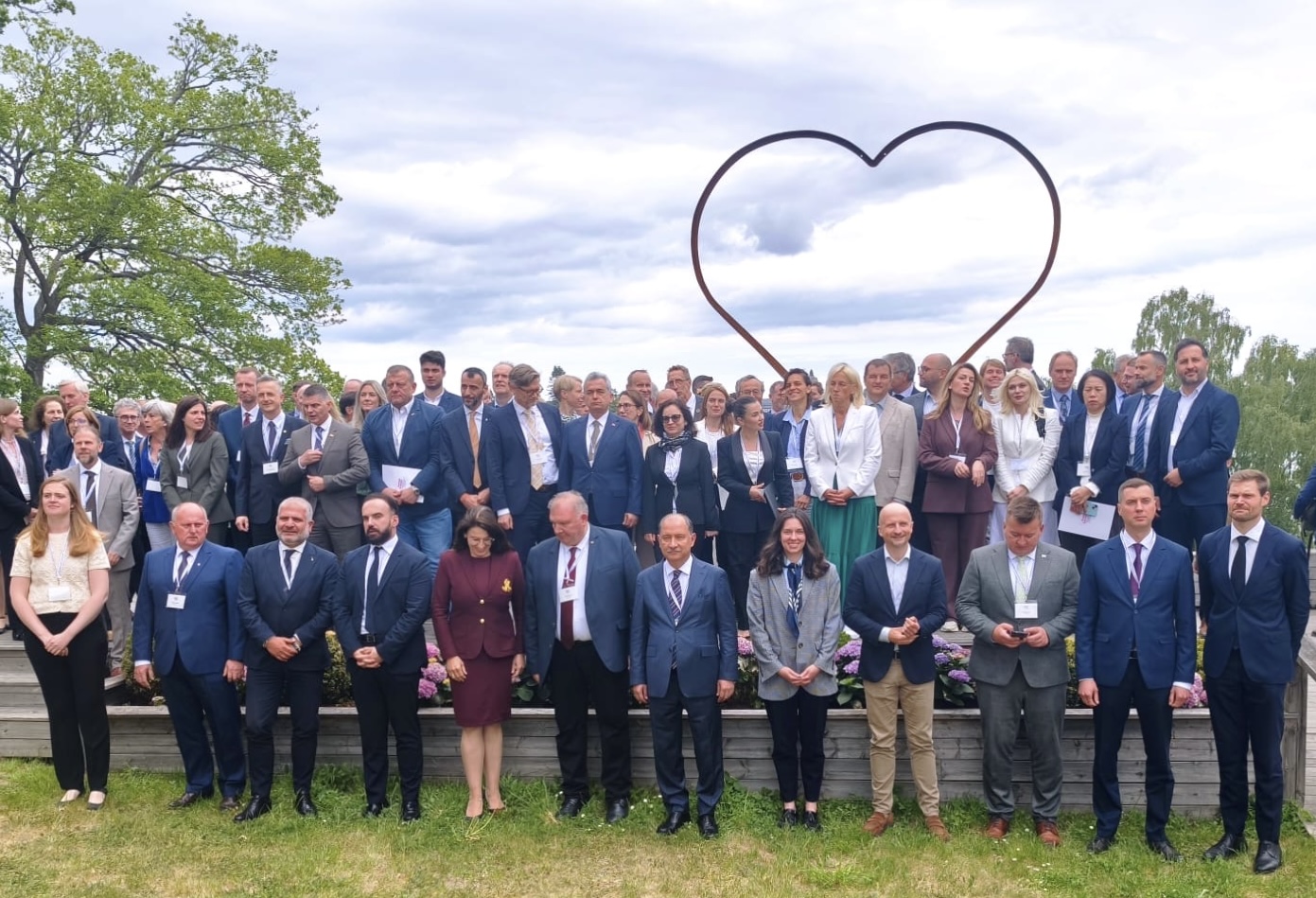
The tenth FOREST EUROPE Ministerial Conference, held in Stockholm, Sweden, focused on sustainable forest management, forest resilience, financing for biodiversity and cooperation between countries in the European region on forest policy. Lithuania was represented by Vice-Minister of Environment Aira Paliukėnaitė.
FOREST EUROPE is a political process bringing together 44 European countries and the European Union to coordinate and define common approaches to sustainable forest management. These principles also guide forest policy in Lithuania, with the Government Programme providing for national policy to be based on the sustainable forest management principles endorsed by FOREST EUROPE.
The Stockholm Ministerial Declaration, signed during the conference, sets out the priorities for further cooperation. It highlights the role of sustainable forest management in protecting biodiversity, strengthening forest resilience, adapting to the effects of climate change and ensuring the long-term benefits that forests provide to society.

“Protecting forest biodiversity requires stable public funding and clear rules. However, achieving lasting results also calls for additional instruments that can attract private investment and finance biodiversity measures in forests,” said Vice-Minister A. Paliukėnaitė.
In Lithuania, forest biodiversity protection is currently financed mainly through public funds. Compensation for restrictions on economic activity in Natura 2000 sites is provided under the EU Common Agricultural Policy or from the national budget. Habitat restoration and other active conservation measures are also supported through EU structural funds and the LIFE Programme for the Environment and Climate Action. Some of these measures are implemented by the State Forest Enterprise.
According to the Vice-Minister, biodiversity credits could complement public funding by linking private investment to specific and measurable nature restoration outcomes. These opportunities will also be examined by the LIFE BIO-CRED Baltic project, scheduled to begin in September 2026. The project will assess how habitat restoration outcomes, including those in forest habitats, could be linked to credible biodiversity credit schemes.
“Biodiversity protection should not be treated separately from forest management. Forest owners and managers need conditions that allow them to integrate these objectives into long-term management and investment decisions,” said A. Paliukėnaitė.
Other conference sessions addressed the state of Europe’s forests, the development of timber construction, green jobs in the forest sector and the role of forests and forest-based value chains in strengthening crisis preparedness. These discussions formed part of the broader debate on sustainable forest management and forest resilience in Europe.
Last updated: 26-06-2026
Related news:
Lithuania’s Social Climate Plan aims to improve living conditions for vulnerable people
Baltic States and Poland strengthen cooperation on implementing energy and climate plans
Key provisions of the EU Packaging and Packaging Waste Regulation now apply
Algirdas Pieniuta takes office as Vice-Minister of Environment