

Lithuania shares its experience in sustainable urban development at the World Urban Forum
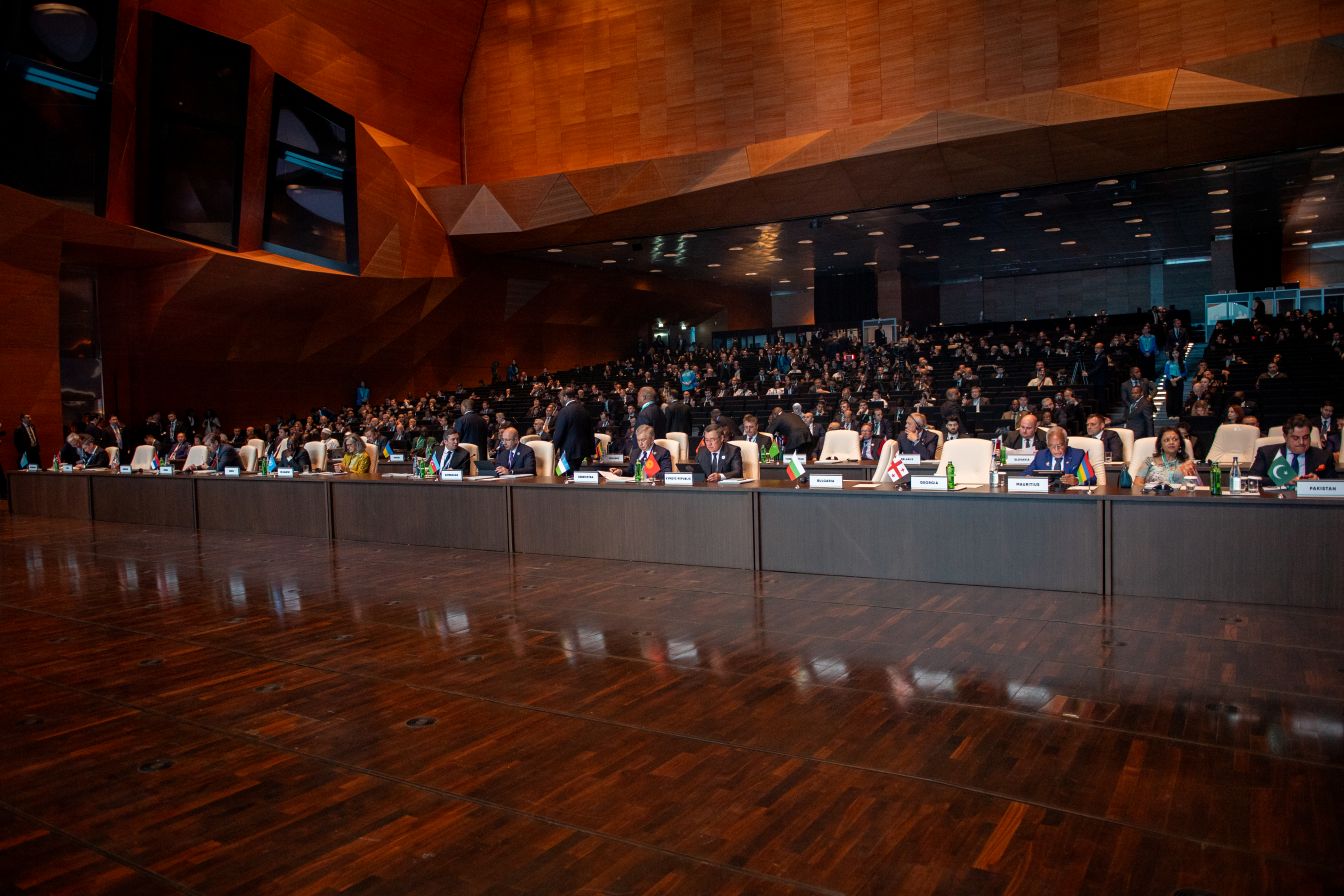
At the thirteenth session of the United Nations World Urban Forum (WUF13), taking place this week in Baku, Azerbaijan, representatives from countries around the world discussed ways to improve housing affordability and strengthen sustainable urban development and resilience to the effects of climate change.
Lithuania was represented by Chancellor of the Ministry of Environment Povilas Poderskis at the Ministerial Meeting on the New Urban Agenda held during the Forum. The meeting focused on the mid-term review of the Agenda’s implementation, assessing the progress made since its adoption by the United Nations in 2016 and the action needed during the remaining decade through 2036.
“For Lithuania, housing is not a separate policy sector. It is the foundation of safe and sustainable cities. This requires transparent planning, solutions tailored to local needs and measurable results. We are pursuing these priorities through long-term planning, a stronger role for municipalities and measures to improve housing quality and people’s living conditions,” said Mr Poderskis at the meeting.

Lithuania noted that the Comprehensive Plan of the Territory of the Republic of Lithuania plays an important role in long-term urban and spatial planning by setting out the country’s territorial development vision. The planning system is also being improved to promote higher urban quality, greater transparency, stronger public participation and a more effective response to climate-related challenges.
Long-term spatial planning in Lithuania is also linked to giving municipalities greater authority over the development of cities and towns. The transfer of state-owned land management to municipalities in 2024 has made it possible to align urban renewal and development more closely with local needs.
In discussions on the global housing crisis, Lithuania stressed the importance of more efficient planning, permitting and renovation processes in improving housing affordability. Digital solutions and better coordination between institutions could reduce project costs, shorten implementation times and create more favourable conditions for investment.
As a practical example of improving housing quality and energy performance, Mr Poderskis presented Lithuania’s multi-apartment building renovation programme. Renovated buildings already achieve energy savings of around 40 per cent, reducing household costs, strengthening energy security and improving living conditions. This contributes to Lithuania’s long-term objective of achieving a zero-emission building stock by 2050 and phasing out the use of fossil fuels for heating.
Lithuania also noted that housing affordability is important not only for quality of life, but also for reducing social exclusion, supporting labour mobility and promoting regional development. The country is therefore working to increase housing supply, expand social and non-market housing options, and give municipalities better tools to respond to local needs.
Looking ahead to the remaining decade of the New Urban Agenda, Lithuania identified three practical priorities: clear and enabling conditions for cities, investment that supports both housing affordability and climate objectives, and consistent monitoring of progress.
Last updated: 26-06-2026
Related news:
Lithuania’s Social Climate Plan aims to improve living conditions for vulnerable people
Baltic States and Poland strengthen cooperation on implementing energy and climate plans
Key provisions of the EU Packaging and Packaging Waste Regulation now apply
Algirdas Pieniuta takes office as Vice-Minister of Environment