

Public invited to comment on planned radioactive waste facility in Belarus
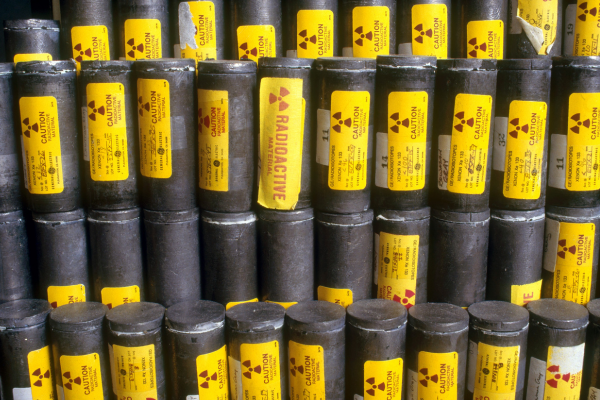
The Ministry of Environment has received an environmental impact assessment report submitted by Belarus concerning the planned construction of a radioactive waste disposal and interim storage facility. Based on the information provided, Lithuania will prepare a response to Belarus on the report and the potential significant transboundary effects on Lithuania’s environment.
Members of the public, experts, and national and municipal authorities are invited to review the documents and submit comments on the assessment of the proposed activity’s environmental effects. The comments will be reviewed and taken into account when preparing Lithuania’s position.
“This is an extensive technical document, so specific comments on the data, assessment assumptions and justification for the proposed safety measures are particularly important. We invite interested parties to consider whether the report adequately examines alternative locations, possible accidents, and the effects on water, air, soil, public health and other aspects of the environment. These issues are particularly important to Lithuania when assessing the proposed activity in a transboundary context,” said Vice-Minister of Environment Akvilė Gargasaitė.
The environmental impact assessment report submitted by Belarus covers the construction of a facility for the disposal and interim storage of radioactive waste. It describes the types of radioactive waste that would be accepted, inspected, sorted, treated and prepared for storage or disposal, as well as the buildings and equipment required for these activities.
According to the report, the facility would be used to dispose of very low-level, low-level and short-lived intermediate-level radioactive waste. Long-lived intermediate-level and high-level radioactive waste would be stored temporarily. The report also assesses the management of radioactive waste generated during the operation and decommissioning of the Belarusian Nuclear Power Plant, as well as previously accumulated institutional radioactive waste.
The information provided states that a near-surface radioactive waste disposal system has been selected. Some of the waste would be placed in repositories constructed near the ground surface, while the remainder would be stored temporarily. The preliminary design includes a complex of 31 buildings and facilities.
Three possible locations in Belarus are under consideration: the Khoiniki district in the Gomel region, the Astravyets district in the Grodno region and the Mstsislaw district in the Mogilev region. According to the report, the location in the Astravyets district is approximately 20 km from the Lithuanian border.
As one of the proposed locations is close to Lithuania, it is important to determine whether the report provides a sufficiently detailed assessment of the potential transboundary effects on Lithuania’s environment. The document assesses these effects at different stages of the facility’s lifecycle, including construction, operation, closure and the post-closure period. It examines radiological and non-radiological effects and sets out measures for impact mitigation, radiation protection and environmental monitoring.
The report also examines possible accident scenarios. These include damage to radioactive waste packages, fires, interruptions to the energy supply, natural hazards and effects caused by human activity. According to the document, these scenarios were modelled to assess the potential movement of radionuclides through the environment.
The Ministry of Environment notes that Belarus informed Lithuania of its intention to carry out the proposed activity in December 2025. During the previous stage of the transboundary environmental impact assessment, Lithuania submitted comments on the environmental impact assessment programme. Lithuania stressed the need for a detailed assessment of the effects on the environment and public health, possible accidents, the transport of radionuclides through air and water, and the effects on transboundary surface water and groundwater bodies. It also requested justification for the criteria used to select the location.
The proposed activity would be implemented in stages. Construction is scheduled for 2028–2030, with operations expected to begin in 2030 and continue for 100 years. Belarus plans to decide whether the proposed activity may proceed later this year.
The environmental impact assessment report in English, information in Lithuanian and a machine translation of the report into Lithuanian are available on the Ministry of Environment’s website.
Comments and proposals should be submitted to the Ministry of Environment by 15 August 2026 by email to [email protected].
Last updated: 14-07-2026
Related news:
Lithuania’s Social Climate Plan aims to improve living conditions for vulnerable people
Baltic States and Poland strengthen cooperation on implementing energy and climate plans
Key provisions of the EU Packaging and Packaging Waste Regulation now apply
Algirdas Pieniuta takes office as Vice-Minister of Environment