

Dr Sharon McGuinness, Executive Director of the European Chemicals Agency, visits Lithuania
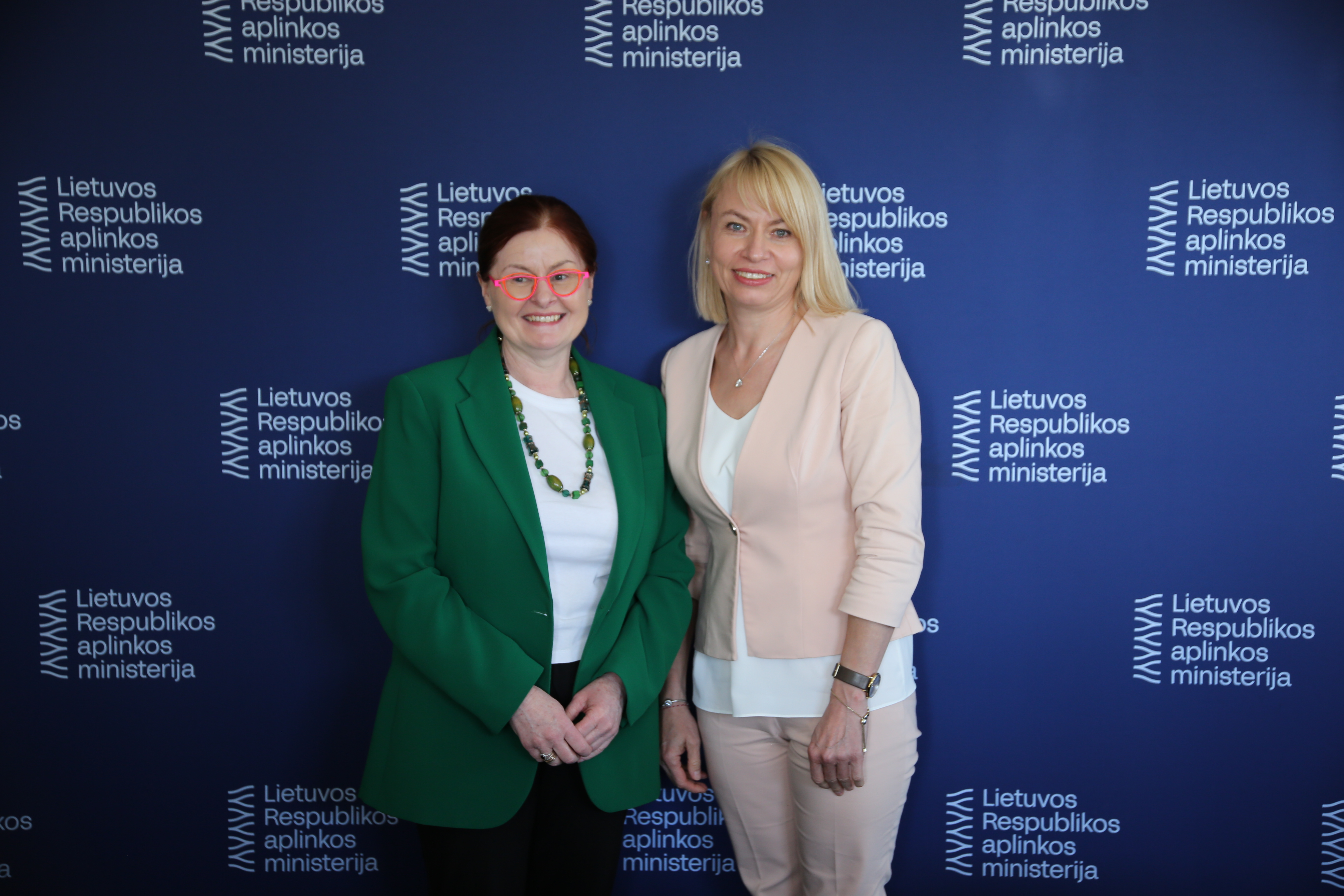
On May 14, Dr. Sharon McGuinness, Executive Director of the European Chemicals Agency (ECHA), visited the Ministry of the Environment. During the meeting, they discussed the implementation of chemicals regulation, enforcement of requirements, and closer cooperation between Lithuanian authorities and ECHA.
"Lithuania actively participates in ECHA's activities, including the Governing Board, Scientific Committees, the Enforcement Information Exchange Forum, HelpNet, and expert working groups. The role of ECHA's Scientific Committees is particularly important in providing informed opinions on the risks posed by chemicals, measures to manage them, and proposals for possible legislative solutions. We are pleased that Lithuania has succeeded in appointing committee members with the necessary expertise to serve on ECHA's Scientific Committees," emphasized Raminta Radavičienė, Vice-Minister for Environment.
Dr. Sharon McGuinness noted that ECHA is facing challenges due to new responsibilities entrusted to it under recent legislative initiatives, not only for chemicals but also for waste management and lifecycle issues. She stressed the importance of cooperation with national authorities to achieve common objectives in the implementation of chemicals regulation.
Representatives of the Ministry of the Environment presented the institutional set-up of chemicals management in Lithuania and highlighted the importance of inter-institutional cooperation when responsibilities for chemicals management are divided among several ministries, agencies, and control authorities. The Environmental Protection Agency (EPA) reported on work priorities in implementing EU chemicals policy, noting challenges due to a lack of resources. The Vilnius Department of the National Centre for Public Health presented its main areas of activity and the priorities and challenges in the field of chemicals.
Established in 2007, ECHA implements European Union legislation on the use and management of chemicals. While one of its objectives is to protect human health and the environment, it also aims to improve the competitiveness of the European chemicals market, foster innovation, and encourage the development of safer alternatives.
ECHA collaborates with the European Commission and EU governments to identify substances of concern, replace them, and make decisions on risk management at the EU level. Consumers have free access to ECHA's unique database, which contains information on hazardous chemicals in the products they buy.
Last updated: 23-05-2024
Related news:
Lithuania’s Social Climate Plan aims to improve living conditions for vulnerable people
Baltic States and Poland strengthen cooperation on implementing energy and climate plans
Key provisions of the EU Packaging and Packaging Waste Regulation now apply
Algirdas Pieniuta takes office as Vice-Minister of Environment