

Environment Council Discusses Eco-Manipulation, Soil Protection, and Waste Sorting
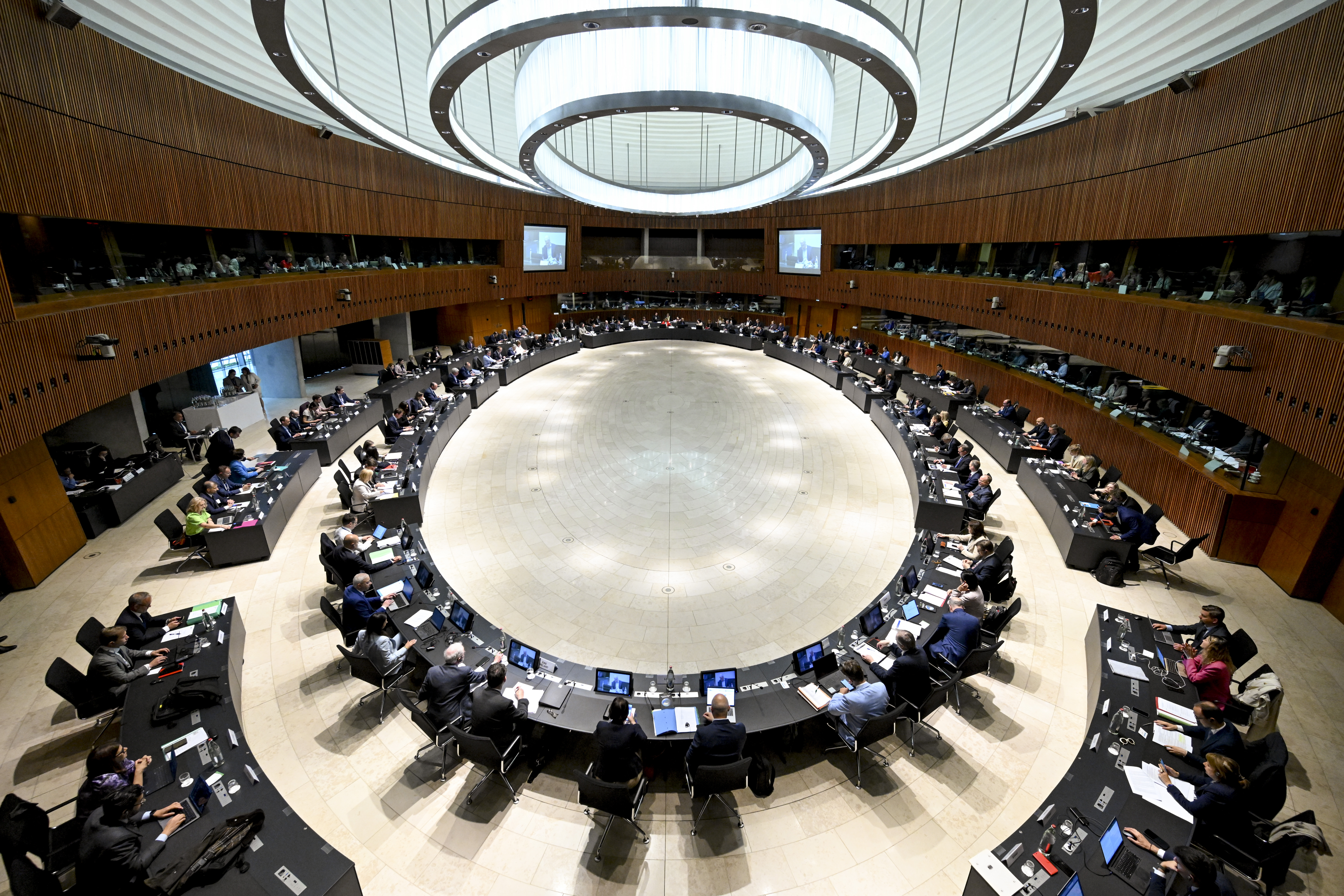
At the Environment Council meeting in Luxembourg on Monday, ministers agreed on a common approach to three significant pieces of legislation: the Eco-Claims Directive, the amendment of the General Waste Directive, and the Soil Monitoring and Resilience Directive.
"As public awareness grows, the demand for environmentally friendly and sustainable products will only increase. It is therefore very important to ensure that our products and services have a real positive impact on the environment, or at least minimize damage to it. The Eco-Claims Directive will strengthen the European Union's progress on sustainability, contributing to the objectives of the Green Deal, climate neutrality, and the transition to a circular economy. This legislation will ensure that green and sustainable claims that influence consumers are scientifically substantiated," said Environment Minister Simonas Gentvilas.
The Eco-Claims Directive, introduced last spring, aims to eliminate eco-manipulation and misleading green, sustainable, and environmentally friendly claims on the market. The legislation seeks to provide clarity for consumers and curb greenwashing in the EU market regarding environmental claims. It would establish a uniform framework of requirements to ensure the validity of environmental claims at the European level. This proposal would benefit businesses by allowing them to reasonably differentiate their products, increasing their attractiveness to consumers, and promoting fair and environmentally sound competition.
The Environment Council also agreed on a common approach to the Soil Monitoring and Resilience Directive.
"Until now, there has been no uniform regulation of soil protection, not only in the European Union but also in Lithuania, and we welcome this common understanding. We hope that the proposed soil monitoring system will help to compare data, accurately assess the state of soil, monitor the effectiveness of sustainable soil management practices, and properly manage soil pollution. The proposal will provide landowners and the public with up-to-date information on the state of the soil," said the Environment Minister.
Member States are required to establish and apply principles for sustainable soil management. They must also identify all potential pollution hotspots, investigate them, and apply pollution management measures where pollution is detected, particularly in accordance with the "polluter pays" principle. It is hoped that Member States will be able to use EU funds to manage land pollution.
A common approach has also been reached on amendments to the General Waste Directive, which cover the prevention of textile and food waste.
Waste reduction targets will be set for Member States. The EU Council agreed that by 2030, countries will have to reduce food waste by 10% in the processing and production chain and by 30% per capita in retail and consumer areas, compared to 2020. Mandatory producer responsibility-based systems for the management of textiles will be established, and the economics of reusing and recycling used textiles and textile waste will be developed.
According to the Environment Minister, Lithuania had already planned to introduce producer responsibility for textiles and therefore welcomes this proposal, which has been refined by Member States during the negotiations. The negotiations took into account the concerns of Lithuania and other countries.
Last updated: 17-07-2024
Related news:
Lithuania’s Social Climate Plan aims to improve living conditions for vulnerable people
Baltic States and Poland strengthen cooperation on implementing energy and climate plans
Key provisions of the EU Packaging and Packaging Waste Regulation now apply
Algirdas Pieniuta takes office as Vice-Minister of Environment