

Espoo meeting in Geneva: discussions on circular economy and green finance
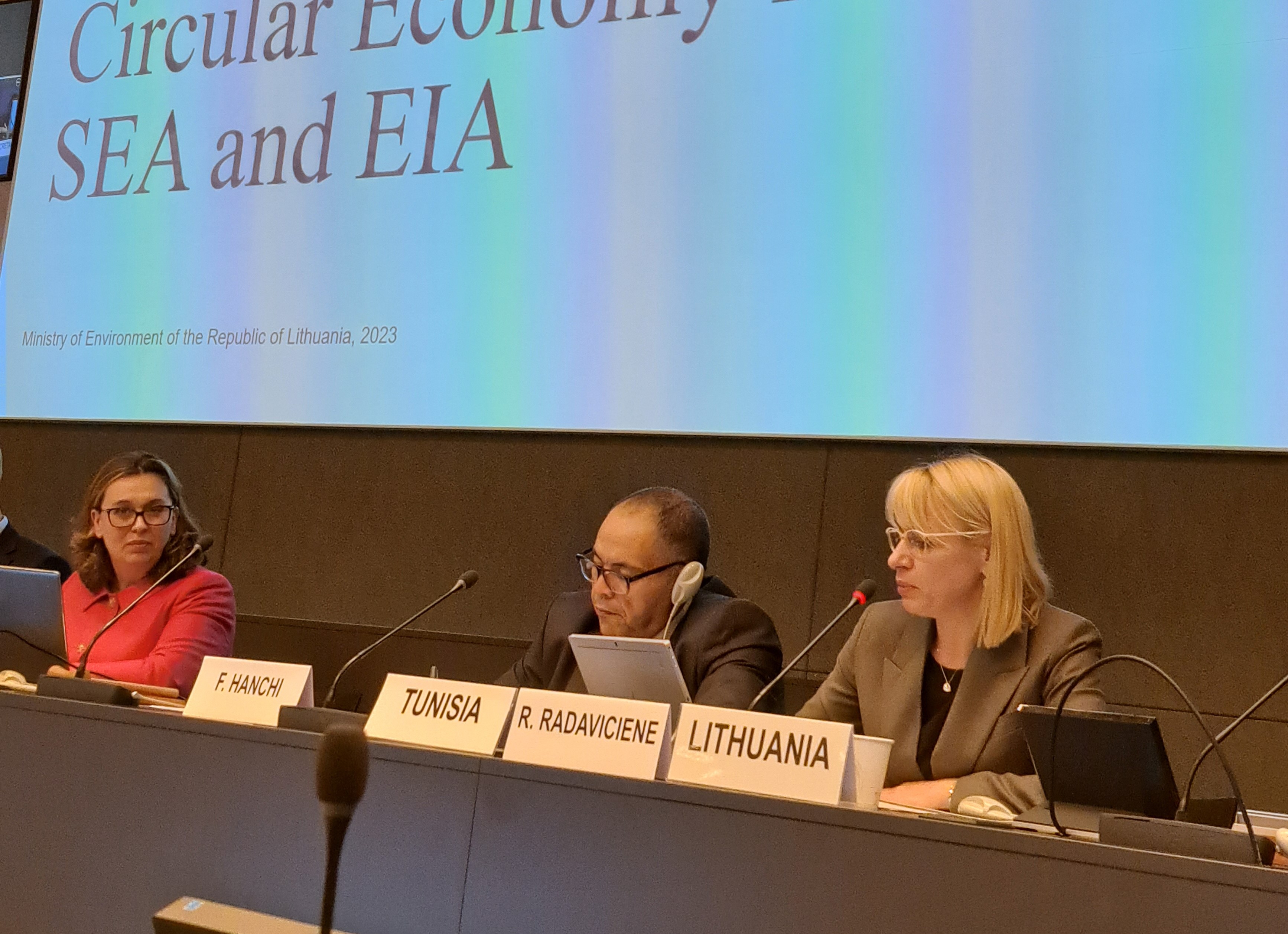
On December 14th, the 9th Meeting of the Parties to the Convention on Environmental Impact Assessment in a Transboundary Context (Espoo Convention) took place in Geneva, Switzerland. The event hosted a high-level discussion on the role of the Espoo Convention and its Protocol in the implementation of energy transition, the circular economy, and green finance.
Deputy Environment Minister Raminta Radavičienė actively participated in this discussion, delivering a presentation on the circular economy within the context of Environmental Impact Assessment (EIA) and Strategic Environmental Assessment (SEA). Emphasizing the potential mutual benefits for the environment, public health, and economic operators, Vice-Minister Radavičienė highlighted that incorporating circular economy principles into EIA and SEA procedures could lead to positive outcomes.
Ms. Radavičienė stated, "The use of secondary raw materials would reduce the need for and cost of primary materials, and the reduction of pollution would also decrease pollution taxes."
During the high-level meeting, ministers, ambassadors, or vice-ministers from various countries had the opportunity to make presentations. Deputy Minister Radavičienė expressed regret about the direct and indirect negative environmental impacts caused by Russia's aggression in Ukraine. The war has not only directly affected the environment and public health but has also indirectly contributed to the destruction of existing facilities, such as dams and industrial plants.
"The consequences of the war have a global impact and undermine the Espoo community's efforts to prevent or at least mitigate significant negative environmental impacts," noted the Vice-Minister.
Decisions arising from these discussions are scheduled to be made on Friday, the concluding day of the 9th Meeting of the Parties to the Espoo Convention.
The Espoo Convention, an international treaty adopted in Espoo, Finland, in 1991 and enforced since September 10, 1997, has been ratified by 44 countries and the European Union. It establishes a framework for a transboundary system of environmental protection, facilitating joint efforts of the Parties to contribute to the preservation of the environment at the local, regional, and global levels, aiming for sustainable and environmentally sound development. The Espoo Convention defines procedures of particular importance, allowing representatives of communities from different countries to cooperate, reconcile different views, and solve problems collaboratively.
Last updated: 07-01-2024
Related news:
Lithuania’s Social Climate Plan aims to improve living conditions for vulnerable people
Baltic States and Poland strengthen cooperation on implementing energy and climate plans
Key provisions of the EU Packaging and Packaging Waste Regulation now apply
Algirdas Pieniuta takes office as Vice-Minister of Environment