

EU Environment Council Adopts Landmark Conclusions on Climate Change and Biodiversity
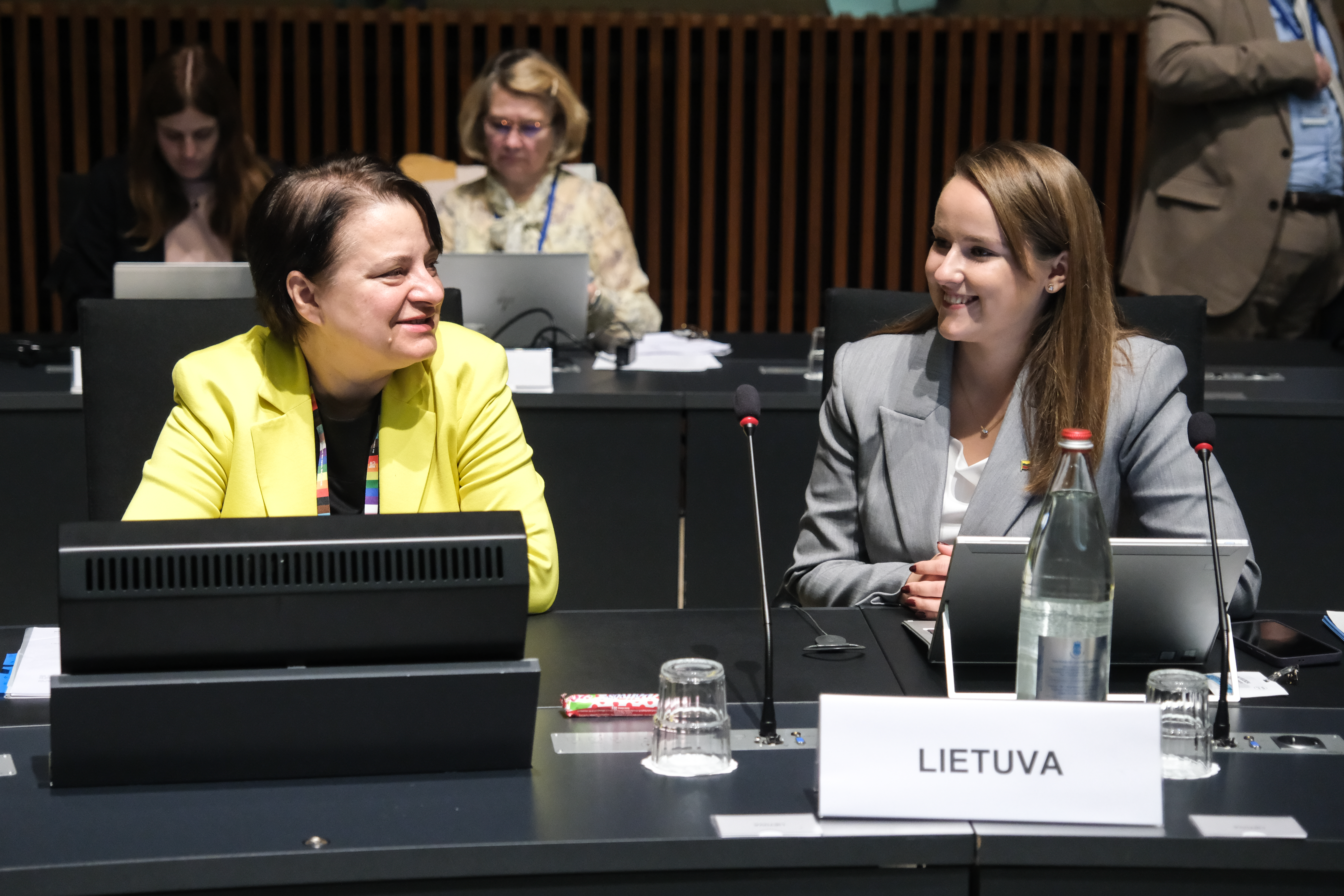
The Environment Council of the European Union convened in Luxembourg on Monday to adopt crucial conclusions regarding the EU's positions at the upcoming international meetings on climate change and biodiversity. The Council discussed the EU's strategy for the Conference of the Parties to the United Nations Framework Convention on Climate Change (COP29), which will be held in Azerbaijan in November, and the Conference of the Parties to the United Nations Convention on Biological Diversity (COP16) in October in Colombia.
The conclusions on COP29 emphasize the EU's commitment to pursuing ambitious solutions to enhance global climate change mitigation targets. The EU aims to ensure that global temperature rise remains below 1.5°C and will focus on addressing the adverse impacts of climate change. Another key objective is to establish a long-term climate finance target for the period beyond 2025.
Laura Masiliauskaitė, Chancellor of the Ministry of the Environment, highlighted that the COP29 conclusions include support for a proposal by Lithuania, Latvia, and Estonia to assess the environmental damage caused by Russia’s war in Ukraine. The proposal aims to hold Russia accountable for these damages by expanding the international register of damage caused to Ukraine.
“We believe that the adoption of a long-term climate finance target must be conditional on more ambitious mitigation commitments by countries. The target must be realistic and achievable, with a broad base of donor countries, taking into account their respective economic capacities and the growing share of global greenhouse gas emissions,” said Masiliauskaitė.
Regarding the COP16 discussions in Colombia, the Council’s conclusions focus on the implementation of the Kunming-Montreal Global Biodiversity Framework, adopted at the end of 2022. The framework includes measures for mainstreaming biodiversity conservation, strengthening links to climate change management, improving health, conserving marine biodiversity, securing financing for conservation, and fostering international cooperation. Discussions will also address issues such as genome editing techniques, the risk assessment of genetically modified organisms, and the use of digital sequence information of genetic resources.
Masiliauskaitė noted, “For Lithuania, the decisions on the implementation of the Biodiversity Agenda and the associated monitoring mechanisms are critical, particularly in relation to national policy development and the preparation of the EU Nature Restoration Regulation.”
The meeting also covered progress on an international legally binding instrument aimed at reducing plastic pollution. With much of the world’s plastic waste being dumped in unregulated landfills, incinerated, or released into the environment, the Council emphasized the urgent need for a global approach to address plastic pollution. The Organisation for Economic Co-operation and Development (OECD) estimates that plastic use will increase by 70% by 2040 if no measures are taken. The UN Environment Assembly has mandated the creation of a legally binding instrument to be finalized by 2024.
“It is essential that this document covers the entire life cycle of plastics, with clear criteria to quickly achieve pollution reduction targets, provide clarity for industries, and prevent unfair competitive conditions,” Masiliauskaitė added.
Lastly, the Council discussed the ongoing implementation of the EU Chemicals Strategy for Sustainability, which seeks to create a non-toxic environment. This strategy supports biodiversity preservation, food system sustainability, the transition to a climate-neutral and circular economy, and sustainable industrial production.
Last updated: 19-11-2024
Related news:
Lithuania’s Social Climate Plan aims to improve living conditions for vulnerable people
Baltic States and Poland strengthen cooperation on implementing energy and climate plans
Key provisions of the EU Packaging and Packaging Waste Regulation now apply
Algirdas Pieniuta takes office as Vice-Minister of Environment