

Informal Meeting of EU Environment Ministers Discusses Strategies to Maintain 1.5°C Global Temperature Limit
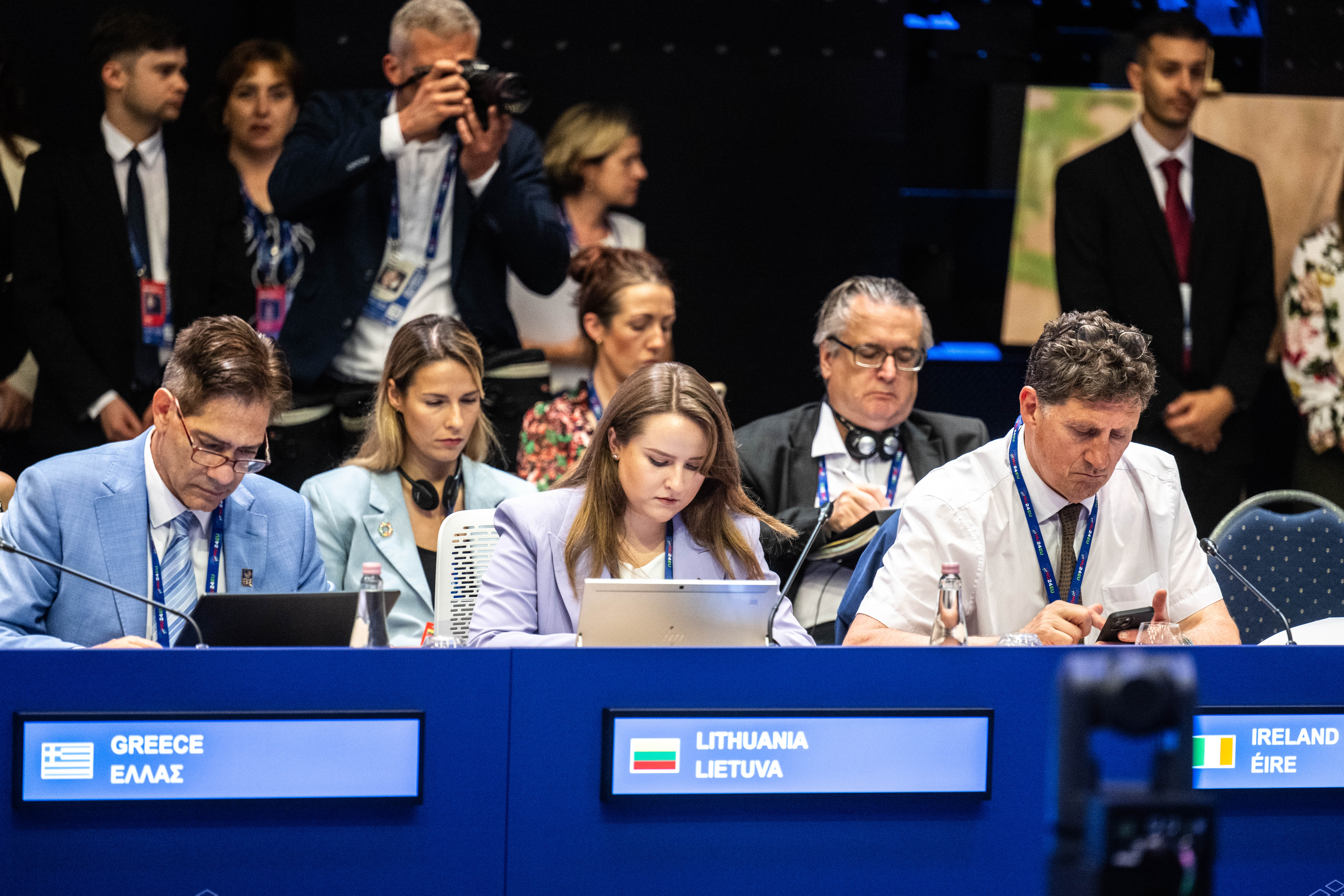
On 11-12 July, an informal meeting of EU environment ministers took place in Budapest, Hungary. The meeting was focused on preparations for the 29th Conference of the Parties to the United Nations Framework Convention on Climate Change (COP29), set to occur this autumn. Lithuania was represented by Laura Masiliauskaitė, Chancellor of the Ministry of the Environment.
The discussions centered on the EU's crucial decisions for COP29. Key issues included increasing global mitigation efforts, determining the size of the new post-2025 Long-Term Climate Change Financing Goal (LTCFF), and expanding the donor base. The ministers also deliberated on how to effectively present the EU's climate policy achievements and the Fit for 55 legislative package as a practical demonstration of the socio-economic benefits of climate change mitigation.
"The new funding target should be realistic, achievable, and closely linked to the mitigation ambitions of all countries to maintain the 1.5°C global temperature rise target of the Paris Agreement," stated Ms. Masiliauskaitė during the meeting.
She emphasized that Lithuania's stance on the methodology for expanding the donor pool for the new climate finance target is that it should be based on objective criteria reflecting countries' actual economic capacities and should consider the different types of support provided by countries.
"Lithuania agrees that showcasing good practices of the EU's climate policy achievements and the implementation of the Fit for 55 legislative package is essential. This not only demonstrates the EU's commitment but also encourages international climate change negotiations by highlighting the socio-economic benefits of mitigation actions, which can mobilize sustainable investments and innovative technologies to boost industrial competitiveness," added Ms. Masiliauskaitė.
EU ministers also discussed water resilience management.
"Lithuania, like many EU countries, faces water policy challenges and must meet the requirements of the Water Framework Directive to improve the status of all waters. While we are not currently facing water scarcity, we recognize that the increasing impacts of climate change could pose serious challenges in the future," said Ms. Masiliauskaitė.
Lithuania, along with 12 other countries, joined Portugal in a letter to the European Commission underscoring the importance of water resources and the need for concrete actions to enhance water security and resilience across the EU. The letter stresses that water issues should be a high priority on the EU's agenda in the coming years. Transboundary water and air pollution also received significant attention.
"Lithuania shares borders with Russia and Belarus, making our border areas vulnerable to air and water pollution. Given the current geopolitical challenges, there is no cooperation with Russia and Belarus, and we lack access to information on pollution from these countries. However, we know they significantly contribute to pollution in Lithuania's major rivers. Therefore, Lithuania, like other countries bordering the EU's external borders, needs to strengthen its existing and advanced monitoring capabilities to promptly stop and effectively manage transboundary pollution," said Ms. Masiliauskaitė.
Lithuania has established mechanisms with its neighbors Latvia and Poland to address transboundary water pollution, allowing for immediate information exchange in the event of a disaster. Regional cooperation on pollution in the Baltic Sea is particularly important under the HELCOM Convention and other international agreements.
Last updated: 17-07-2024
Related news:
Lithuania’s Social Climate Plan aims to improve living conditions for vulnerable people
Baltic States and Poland strengthen cooperation on implementing energy and climate plans
Key provisions of the EU Packaging and Packaging Waste Regulation now apply
Algirdas Pieniuta takes office as Vice-Minister of Environment