

Informal meeting of EU environment ministers joins with business on how to move towards a green economy
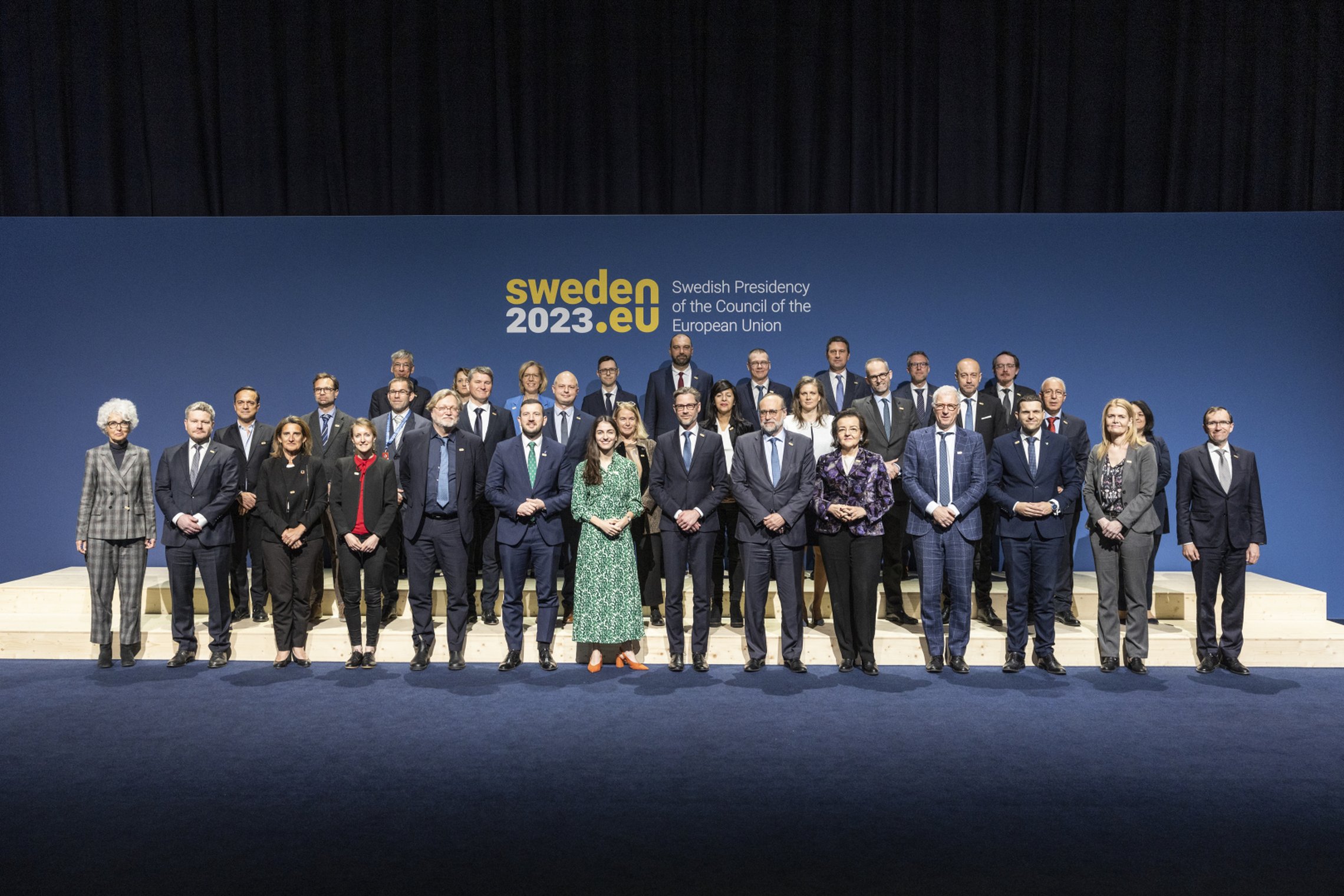
On Tuesday, EU Environment Ministers, along with business representatives from various countries, convened informally to discuss how to enhance the effectiveness of the ambitious goals outlined in the European Green Deal. The Lithuanian Minister of the Environment, Simonas Gentvilas, and the Ministry's delegation were joined by Kęstutis Juščius, CEO of the Auga Group, who shared the company's successful practices in achieving climate neutrality in Lithuania.
For the first time, the Swedish Presidency extended invitations to business representatives leading Europe's transition to a green economy for the Ministerial Meeting. Over 15 business representatives from different countries participated, aiming to find ways to encourage and collaborate with businesses to overcome obstacles in transitioning to a green economy.
"Businesses, scientific institutions, and the government need to collaborate more closely. It is crucial that everyone comes together, as more resources will be required for innovative technologies in the future. Scientists can assist businesses in identifying and implementing the latest technologies, businesses can invest in technology, and the government can provide incentives for green investments and employ innovative financing instruments," stated Environment Minister Simonas Gentvilas.
The informal meeting comprised two discussion sessions. In the first session, ministers and business representatives shared experiences and expectations regarding conditions, incentives, and cooperation to overcome barriers and achieve green targets. The second panel focused on how the business community can contribute to halting biodiversity loss, enhancing raw material efficiency and resilience in industry, and balancing Europe's climate neutrality objectives with business competitiveness and sustainable development.
Businesses emphasized the need for recycled raw materials, crucial for producing green and sustainable products, to be cheaper than virgin raw materials. They called for the efficient recovery and remanufacturing of primary fossil raw materials, like aluminum and other metals, aligning with circular economy principles.
Additionally, concerns were raised about financial incentives for innovation and technologies reducing ecological footprints, the consistency of legislation across EU Member States, the absence of sustainable raw material markets, and uncertainty surrounding green standards and requirements.
Minister Simonas Gentvilas stressed the necessity of reviewing and improving state aid rules, promoting green public procurement, and increasing demand for clean technologies. He also emphasized the importance of international trade agreements and global technological cooperation, not limiting collaboration to EU Member States.
Kęstutis Juščius, CEO of Auga Group, highlighted the significance of adopting new and sustainable technologies. He presented how the company, through organic farming and the utilization of methane in agricultural machinery, contributes to lower environmental impact and avoids chemical pollution. The AUGA Group's innovative biomethane-electric tractor, the AUGA M1, has the potential to reduce CO2 emissions by up to 100 tonnes per year.
The informal meeting of EU environment ministers took place in Stockholm on April 18-19. On the second day, ministers showcased electric heavy goods vehicles, and during a working lunch, they discussed the implementation of the circular plastics economy and the new global binding agreement to reduce plastic pollution.
Last updated: 09-01-2024
Related news:
Lithuania’s Social Climate Plan aims to improve living conditions for vulnerable people
Baltic States and Poland strengthen cooperation on implementing energy and climate plans
Key provisions of the EU Packaging and Packaging Waste Regulation now apply
Algirdas Pieniuta takes office as Vice-Minister of Environment