

Report on Lithuania's implementation of the Sustainable Development Goals was presented at the United Nations
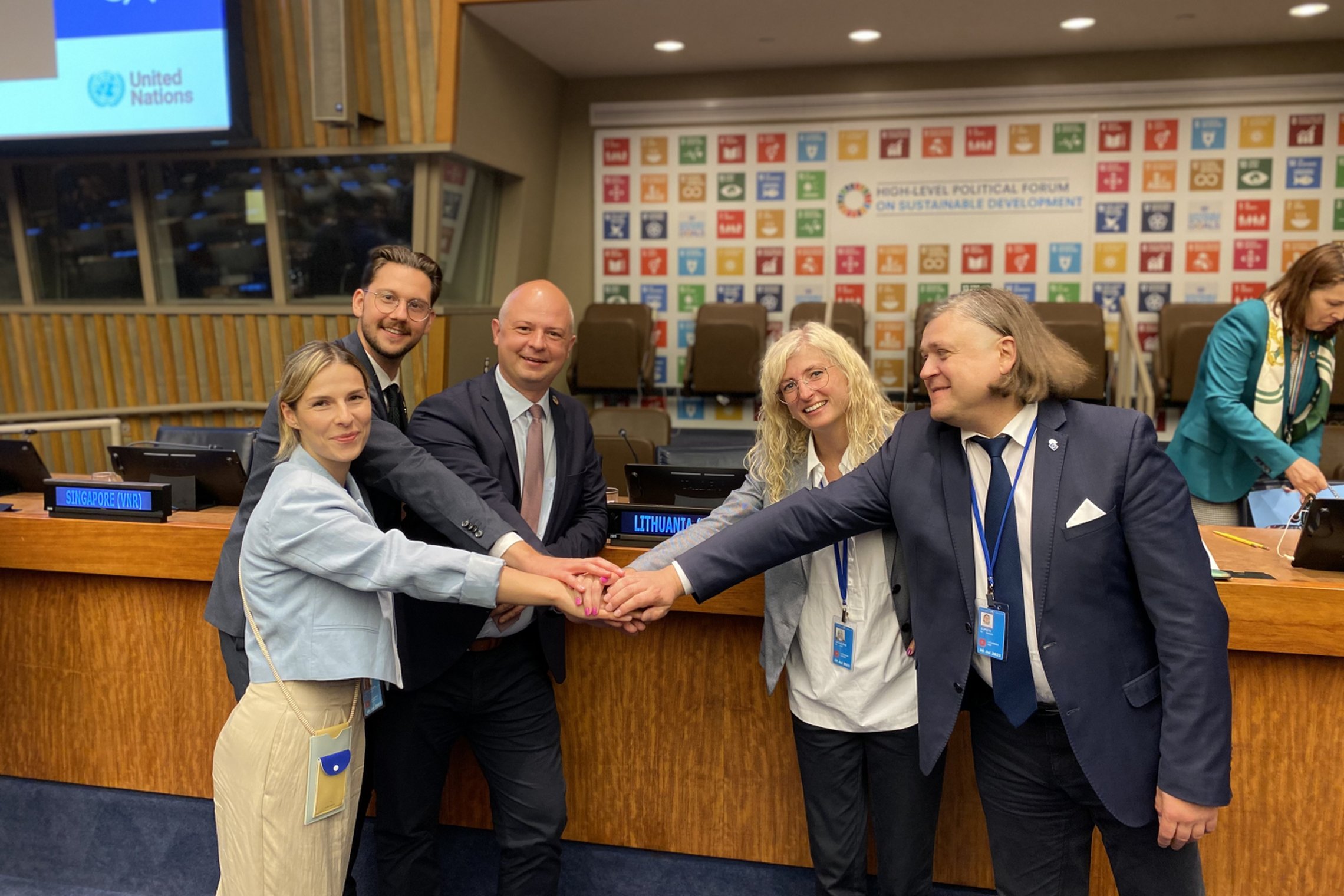
Simonas Gentvilas, Minister of the Environment, presented Lithuania's second voluntary report on the implementation of the Sustainable Development Goals (SDGs) at the United Nations High-Level Political Forum on Sustainable Development, assessing the country's progress from 2018 to 2023.
"This review is the outcome of collaborative efforts between the government and non-governmental sectors. Since the last review, significant changes have been made to our strategic management framework. Sustainable development objectives are now integrated into our key national plans, ensuring progress in the social, economic, environmental, and security spheres," said Simonas Gentvilas, Minister of the Environment, during the report presentation.
Lithuania has committed to achieving all 17 Sustainable Development Goals (SDGs) as part of its support for the United Nations 2030 Agenda for Sustainable Development. Minister Gentvilas shared Lithuania's achievements and identified challenges in SDGs implementation.
During the presentation, the Environment Minister highlighted Lithuania's progress since 2018 in reducing poverty, promoting gender equality, inclusive education and innovation, and accelerating the development of renewable energy.
"Lithuania has made strides in energy security and sustainability. Our strategic decision to build a liquefied natural gas terminal made Lithuania the first EU country to cut off imports of Russian gas and all other fossil fuels in May 2022. The war in Ukraine emphasized the importance of energy independence, accelerating Lithuania's transition to renewable energy. The Lithuanian Government aims to obtain 50% of the country's electricity consumption from renewable sources by 2030," shared the Minister.
Since 2018, Lithuania has reduced the population's risk of poverty or social exclusion by over 5% and diminished income inequality nearly sixfold. The country leads the EU in reducing child poverty, with a reduction of over 6% since 2018. Initiatives are underway to ensure equal access to education for rural and urban populations, as well as ethnic communities and minorities.
Minister Gentvilas emphasized the significance of education in the innovation market, stating, "Education, government support, and a favorable regulatory environment encourage young entrepreneurs to create global innovations. We are proud of Lithuania's growing startup ecosystem, with many globally renowned brands. Gender equality is a priority in our startup ecosystem - in 2020, 38% of startups had at least one female founder."
To achieve all the SDGs by 2030, Lithuania must focus on promoting responsible production and consumption. The Minister highlighted the creation of a circular and climate-neutral economy as a crucial long-term challenge for both Lithuania and the world.
"Lithuania aims for a climate-neutral and fully circular economy by 2050. However, the circular economy's development is slow and uneven. The transition to a climate-neutral economy, aligned with a circular approach, is a strategic priority, capturing the attention of various economic sectors," said Minister Gentvilas.
He stressed the importance of caring for the most vulnerable to achieve the SDGs, noting that in 2022, Lithuania allocated 0.36% of its Gross National Income to official development assistance, exceeding international commitments, with a focus on assistance to Ukraine.
"Now, more than ever, we must act together. Ukraine is a key priority for Lithuania's development cooperation. We provide a wide range of assistance - humanitarian, financial, and expert. It is crucial to mobilize and strengthen partnerships, promoting more structured cooperation at the national, regional, and international levels," concluded Simonas Gentvilas.
Kęstutis Kupšys, Member of the European Economic and Social Committee and Vice President of the Consumer Alliance, represented civil society during the Lithuanian presentation. Ireland, the Bahamas, Japan, and Belarus posed questions on human rights, stakeholder engagement, implementation of the circular economy, and the possibility of showcasing Lithuanian innovations at EXPO 2025 Osaka.
Last updated: 09-01-2024
Related news:
Lithuania’s Social Climate Plan aims to improve living conditions for vulnerable people
Baltic States and Poland strengthen cooperation on implementing energy and climate plans
Key provisions of the EU Packaging and Packaging Waste Regulation now apply
Algirdas Pieniuta takes office as Vice-Minister of Environment