

UN High-Level Political Forum on Sustainable Development: discussing Lithuania's progress on climate change and focus on Ukraine
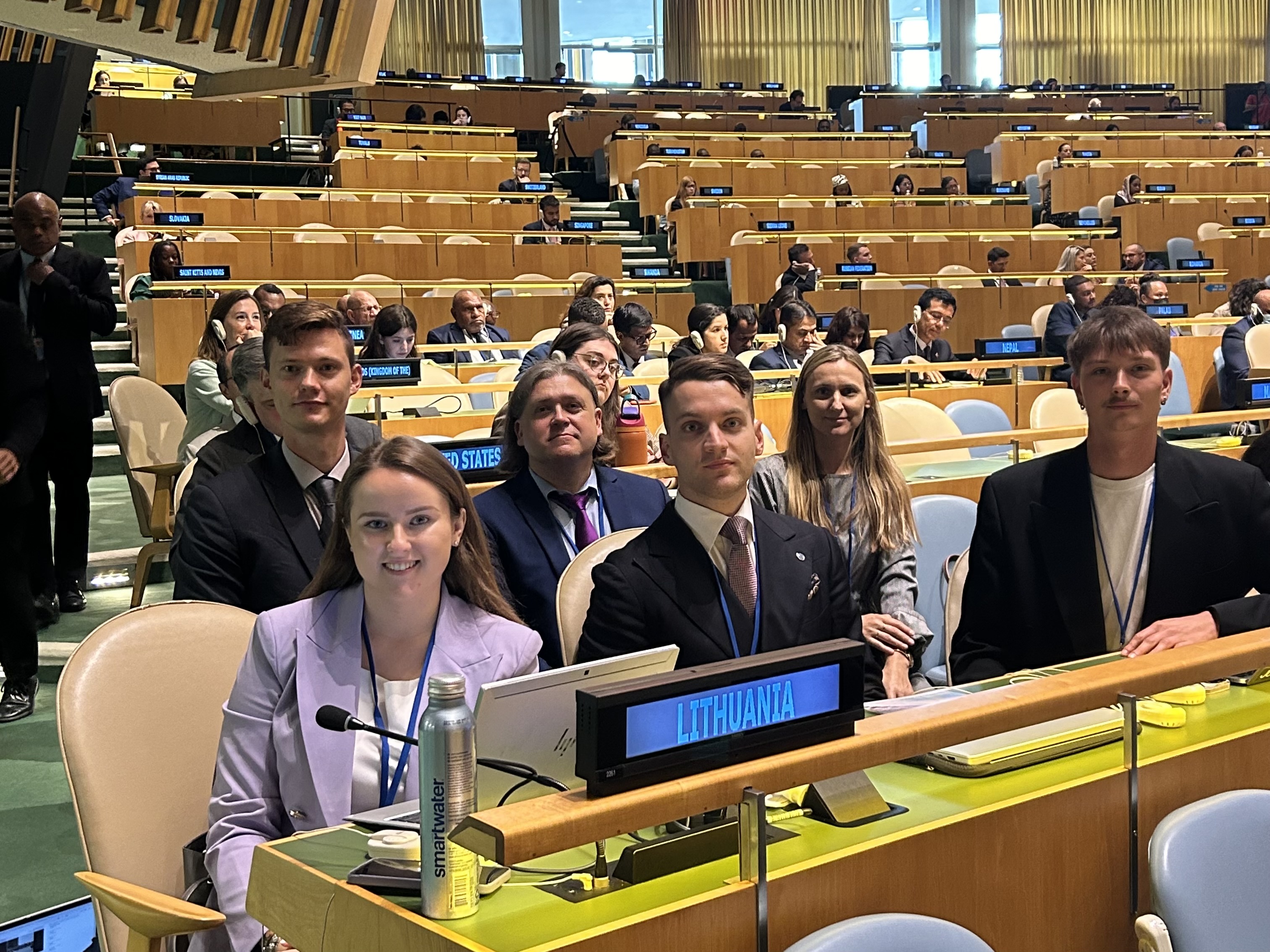
Laura Masiliauskaitė, Chancellor of the Ministry of the Environment, spoke at the United Nations (UN) High-Level Political Forum on Sustainable Development in New York, USA, this week. The forum, titled "Strengthening the 2030 Agenda and Eradicating Poverty in Emerging Emergencies: Effective Implementation of Sustainable, Resilient, and Innovative Solutions," focused on Lithuania's achievements in sustainable development, particularly in mitigating the effects of war, climate change, biodiversity loss, and pollution.
This forum aims to foster cooperation in sustainable development and monitor progress in implementing the Sustainable Development Goals (SDGs) outlined in the UN 2030 Agenda. Countries present voluntary sustainable development reports at the High-Level Political Forum. Lithuania presented its second SDG Voluntary Report last year.
"Lithuania, alongside the European Union, leads the fight against climate change in both ambition and achievements. Our country has demonstrated that economic growth is possible without increasing environmental pollution and greenhouse gas emissions. Since 1990, Lithuania has reduced its greenhouse gas emissions by 61% while achieving a 92% growth in gross domestic product," said Chancellor Masiliauskaitė.
Masiliauskaitė emphasized that renewable energy, the phasing out of fossil fuels, and the promotion of innovative technologies across all sectors of the economy are central to Lithuania's national strategy.
"Currently, over a quarter of our energy comes from renewable sources, and we aim to increase this to 55% by 2030 and 95% by 2050. Lithuania is taking bold steps to meet its ambitious commitments to become climate neutral and achieve a fully circular economy by 2050," she stated.
In her speech, Masiliauskaitė stressed that war is the greatest enemy of sustainable development, causing ecological and humanitarian disasters, as demonstrated by Russia's war against Ukraine.
"After Ukraine's victory, we must unite international efforts to rebuild Ukraine. This unity could become a model for development cooperation," said Masiliauskaitė.
At the forum, ministers and state representatives adopted a political declaration by consensus, encouraging the global community to take bold and ambitious action to accelerate the implementation of the SDGs by 2030. This declaration will significantly impact the Future Summit on September 22-23, 2024, in New York, where Heads of State will discuss and seek to adopt a Pact for the Future, reaffirming their commitment to global peace, the rule of law, and human rights.
During the forum, Masiliauskaitė also met with delegations from Belize, Botswana, and the Dominican Republic. She presented Lithuania's best practices, such as the deposit collection system, discussed development cooperation opportunities, and invited representatives from these countries to organize study visits to Lithuania. On the sidelines, she met with Michal Mlynar, Deputy Executive Director of UN Habitat, to discuss cooperation opportunities, UN Habitat's involvement, and the challenges of sustainable urban regeneration and recovery in Ukraine. The unique project "3D Digital Spatial Planning Tool for Ukrainian Municipalities" by the Construction Sector Development Agency and Vilnius Plan UAB was presented.
Lithuania's ongoing support for Ukraine was also highlighted in a meeting with the UN Under-Secretary-General for Economic and Social Affairs, Li Junhua. The meeting underscored Lithuania's work in developing a circular economy, its willingness to share best practices with other countries in the region, and its expectations for the Future Summit.
At the invitation of the Organisation for Economic Co-operation and Development (OECD) and Slovakia, Masiliauskaitė presented Lithuania's progress in aligning the SDGs with the country's strategic objectives, emphasizing the need for urgent international action to prevent the negative effects of future crises.
Last updated: 18-07-2024
Related news:
Lithuania’s Social Climate Plan aims to improve living conditions for vulnerable people
Baltic States and Poland strengthen cooperation on implementing energy and climate plans
Key provisions of the EU Packaging and Packaging Waste Regulation now apply
Algirdas Pieniuta takes office as Vice-Minister of Environment